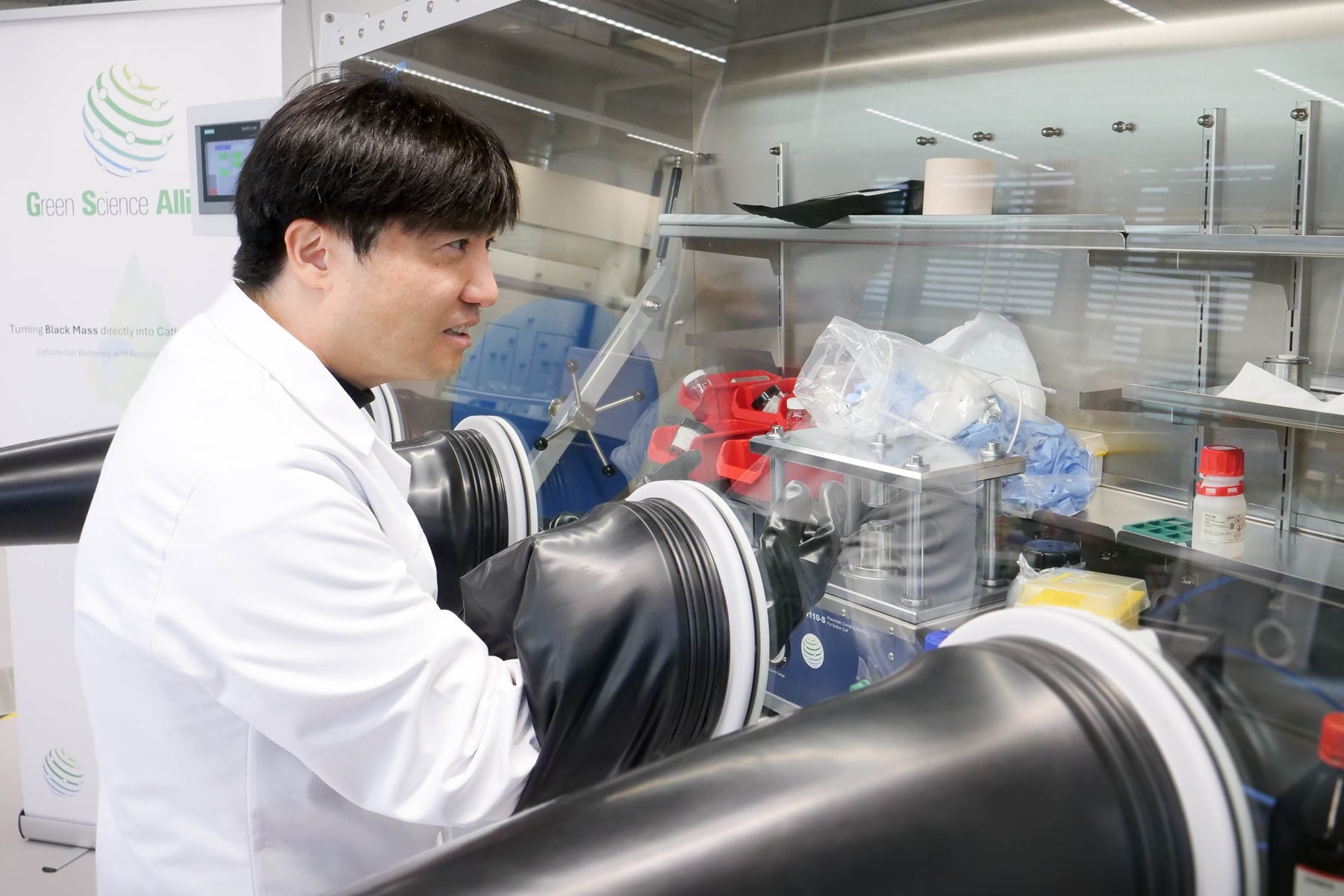
Japan’s Green Science Alliance has opened a battery recycling laboratory at Switzerland Innovation Park Biel/Bienne in the canton of Bern, electrive reports. Working with the Swiss Battery Technology Center, the company plans to recover cathode material from spent lithium-ion batteries for reuse in new cells, rather than first separating it into individual metals.
The research centres on black mass, the powder produced when end-of-life batteries undergo shredding and mechanical treatment. Conventional recycling extracts metals including lithium, nickel and cobalt using acids or alkalis, followed by further processing to manufacture cathode material. Green Science Alliance instead proposes regenerating the cathode material directly. The approach is intended to cut processing stages and resource use, although the partners have not released precise details of their method.
According to electrive, the participants report that batteries containing Green Science Alliance’s regenerated cathode material delivered more than 90 per cent of the initial capacity achieved by comparable batteries using commercial-grade material. That result remains a laboratory claim: the report provides no details on charge-cycle counts, cell format or independent measurements. Research covers both nickel-manganese-cobalt and lithium iron phosphate batteries. The latter contain no nickel or cobalt, which makes recovering individual metals less economically attractive and increases the importance of a low-cost recycling route.
Green Science Alliance is supplying the recycling technology, while the Swiss centre contributes laboratory space, infrastructure and technical expertise. The partners will analyse recovered materials, manufacture electrodes and cells, and test their performance to assess the potential for industrial scale-up. Initial work is supported by an Innovation Cheque from Switzerland’s Innosuisse funding agency. The scheme covers Swiss research partner costs of up to 15,000 Swiss francs, approximately €16,200, for feasibility studies completed within six months.
The project comes as the EU Battery Regulation requires higher recovery rates for lithium, nickel and cobalt, alongside minimum recycled-material content in new vehicle batteries from August 2031. However, electrive cites the EU’s Safeloop study as estimating recycling losses at about €1.90 per kilogram of battery pack. The partners argue that their process could reduce reliance on newly mined materials and strengthen European battery supply chains at scale. Whether its reported laboratory performance can be maintained with larger material volumes has yet to be established.